
Baltic Summit 2026 was all about AI & Power Platform
Baltic Summit 2026 just wrapped up in Gdynia, Poland, and I’m still working through my notes. Three days, a packed agenda, and honestly one of the best-organized conferences I’ve attended in a while. Registration was smooth, and the tracks were easy to follow. By the end, the whole event felt well thought out from start to finish.
The overall theme across sessions was clear: AI, Copilot, Power Platform solutions, governance, and security. All of it was viewed from a dozen different angles. Some speakers tackled agent orchestration head-on. Others focused on data pipelines, testing, or simply getting more people comfortable with code-first tools. Meanwhile, I walked away with a stack of fresh perspectives. A few validations too: I’m not the only one experimenting with similar approaches.
Let’s get into my highlights.
Baltic Summit 2026 Session Highlights
Two days, a packed agenda, and a handful of sessions I’m still thinking about. Here’s how they unfolded.
Day 1
Day 1 started with a wake-up call at Baltic Summit 2026. Claire Edgson and Jon Edgson’s “A Mad Scientist’s Guide to Testing M365 Copilot and Copilot Studio Agents” kicked things off. They covered common mistakes: grounding data that drifts after deployment, and prompt injection through a single SharePoint document. A summary passed between two agents can even become an attack path nobody notices. The delivery was funny, but the message was serious. “It worked in the demo” is the most expensive sentence in enterprise AI.
Right after that came one of the most impressive sessions of the event. Samir Makwana and David Lorenzo López presented “From Chaos to Symphony.” They showed how orchestrator patterns like delegation and parallel execution actually work in the Microsoft Agent Framework, live. Multiple agents handled parts of the task, then handed control back to an orchestrator that made sense of it all. Watching that choreography happen live said more than any slide could have.
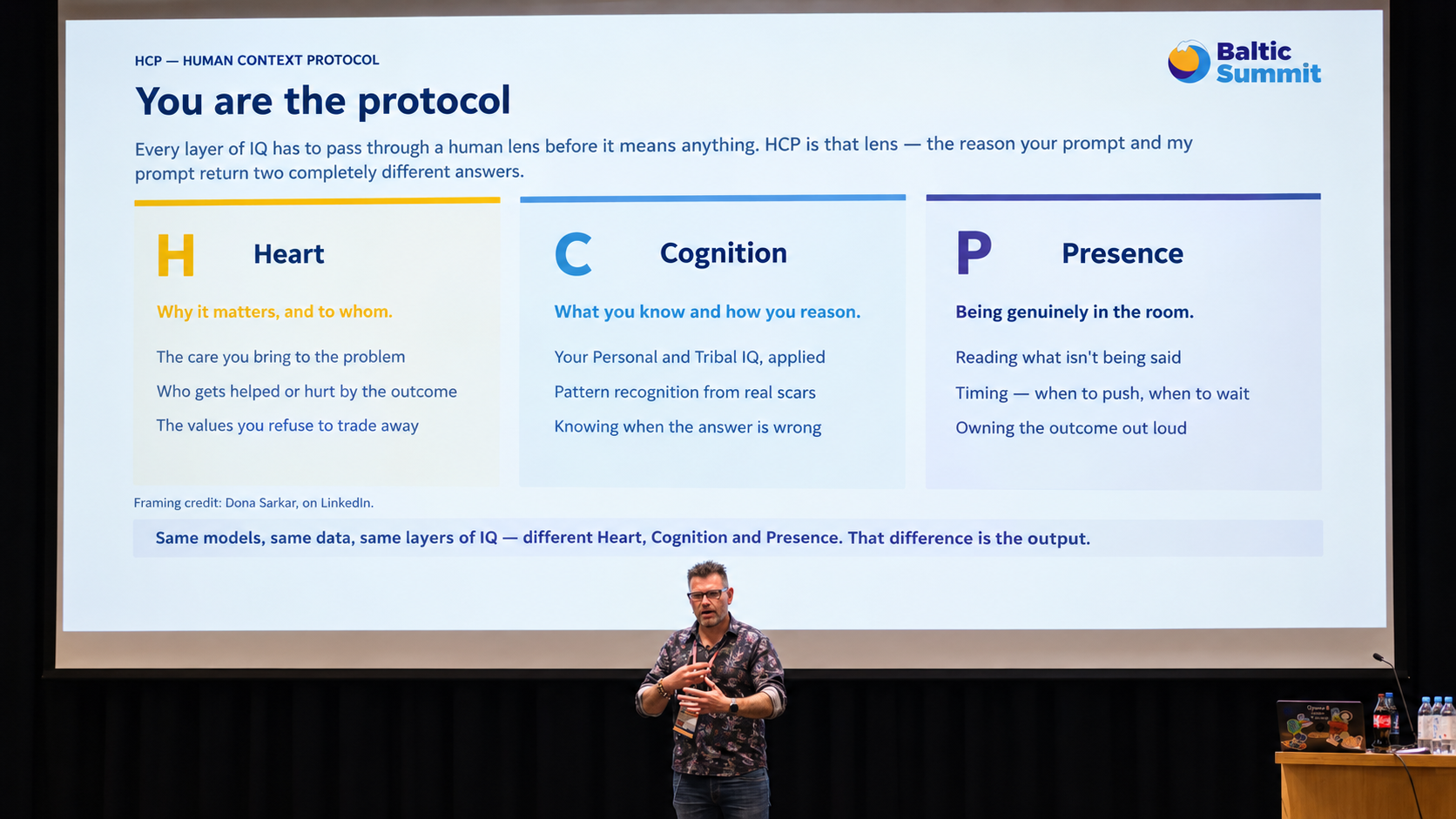
Another highlight was Chris Huntingford’s talk. He wasn’t there to demo a product. Instead, he talked mindset. Embracing AI, while staying honest about your own skills, can empower your career instead of threatening it. Along the way, he introduced his own wordplay on MCP: the “Human Context Protocol.” A funny name, but the point behind it stuck with me.
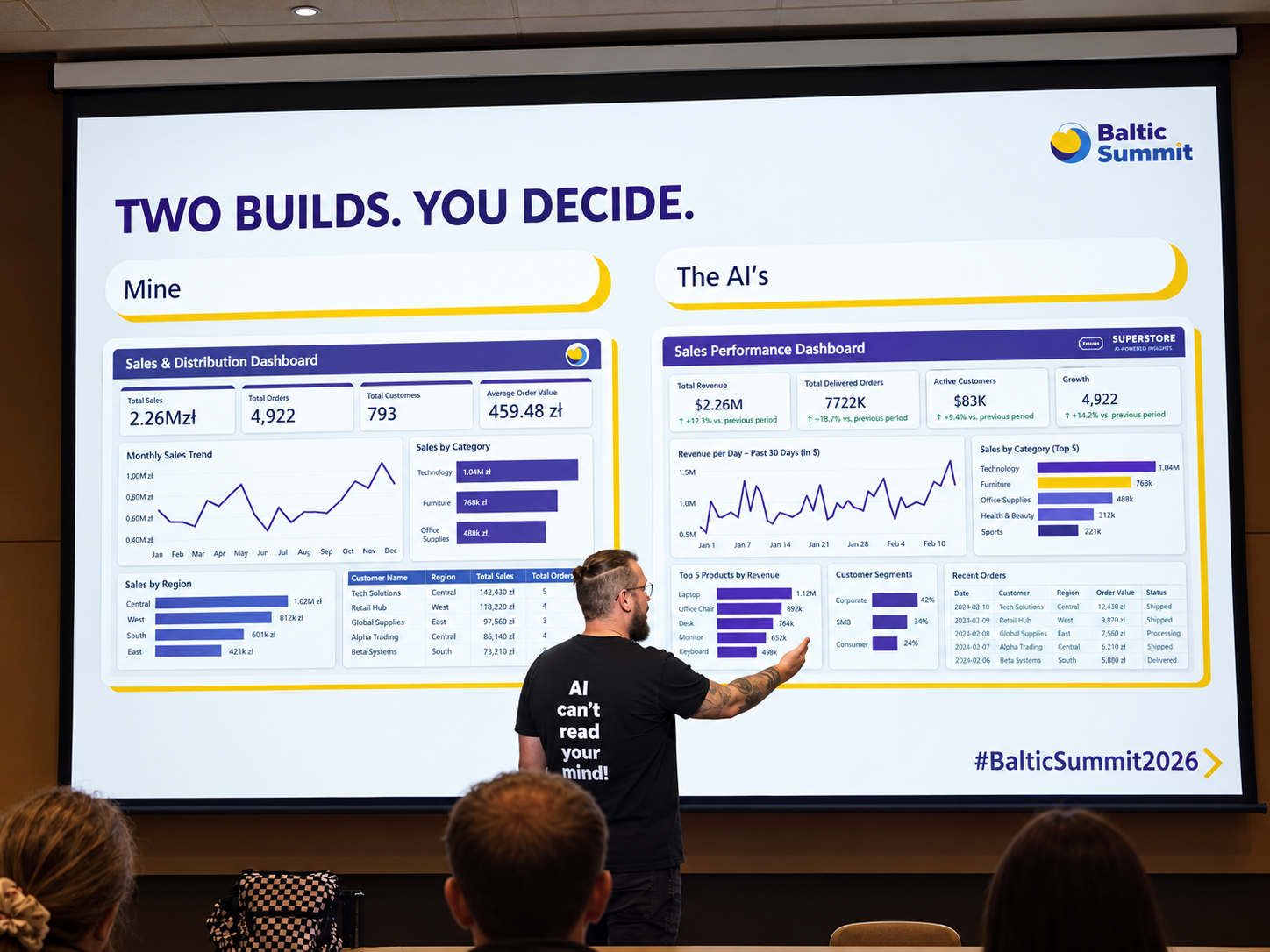
Then it was my turn. I shared my experience with Microsoft Power Platform, Copilot, and AI-driven development using GitHub Copilot. Using my Teams-to-ServiceNow bridge as the example, I walked the audience through the business case first. Then I showed how I rebuilt the entire agentic solution, with AI doing most of the heavy lifting. More on that rebuild in a future post.
Day 2
Day two opened with Duncan Boyne, who shared genuinely useful design principles for Power BI dashboards. Real trade-offs, not just best-practice slides.
Mitul Tailor followed with a session on transforming data with Microsoft Fabric. He showed how to get it ready to hand off to AI Agents. A great reminder that agentic solutions live or die on the data pipeline behind them.
Another highlight: Tom Mullens showed how he uses self-deployed MCP servers. He combines multiple APIs into one tailored toolset for Copilots. His example combined ServiceNow, Teams, and SharePoint APIs into a single toolset a Copilot agent could call. That’s close to exactly what I’m doing in my own solution.
Nick Doelman’s session touched me the most. His approach to using AI for Dataverse solution development is close to what I’m currently doing. It’s close to my own work with Spec-Driven Development and GitHub Copilot. He showed Claude Code building its own app, live. It used the Power Platform Skills repository for scaffolding and examples along the way. I hadn’t grasped how well that combination could work until I saw it in action.
Keith Atherton closed my day with a fast tour through where Power App development is heading. Generative pages, code apps, and vibe apps, where describing what you want is already half the job. The spectrum of Power Platform is far broader than it used to be. You can design a single page with AI or hand over an entire app. Both are now equally valid starting points.
My Takeaways
I left Baltic Summit 2026 with a lot to process, and the trip to Gdynia was absolutely worth it.
A few things stuck with me more than the rest.
AI is showing up almost everywhere now, not just in a handful of flagship scenarios. What really got me thinking, though, was how much becomes possible once you start combining technologies. Agents, MCPs, and a bit of personal creativity, stacked together, can produce something remarkable. Not long ago, that would have needed a whole team. AI-driven development, in particular, feels like a genuine game changer. I felt it myself while preparing my own presentation, and I saw the same thing again in Nick Doelman’s session.
But honestly, one of the greatest things about the event had nothing to do with any single session. It was the conversations in between. I spent a lot of time talking with the other speakers and comparing notes. We dug into how they approached the same problems from their own angle. We swapped ideas about these technologies and, more than once, walked away having learned something from each other. No slide deck could have taught us that. Someone summed it up perfectly: “The best session always happens in the speaker room.”
One thing is clear: I need to spend real time with other development tools like Claude Code and Cursor. I want to understand where they differ from what I already use, and where they overlap.